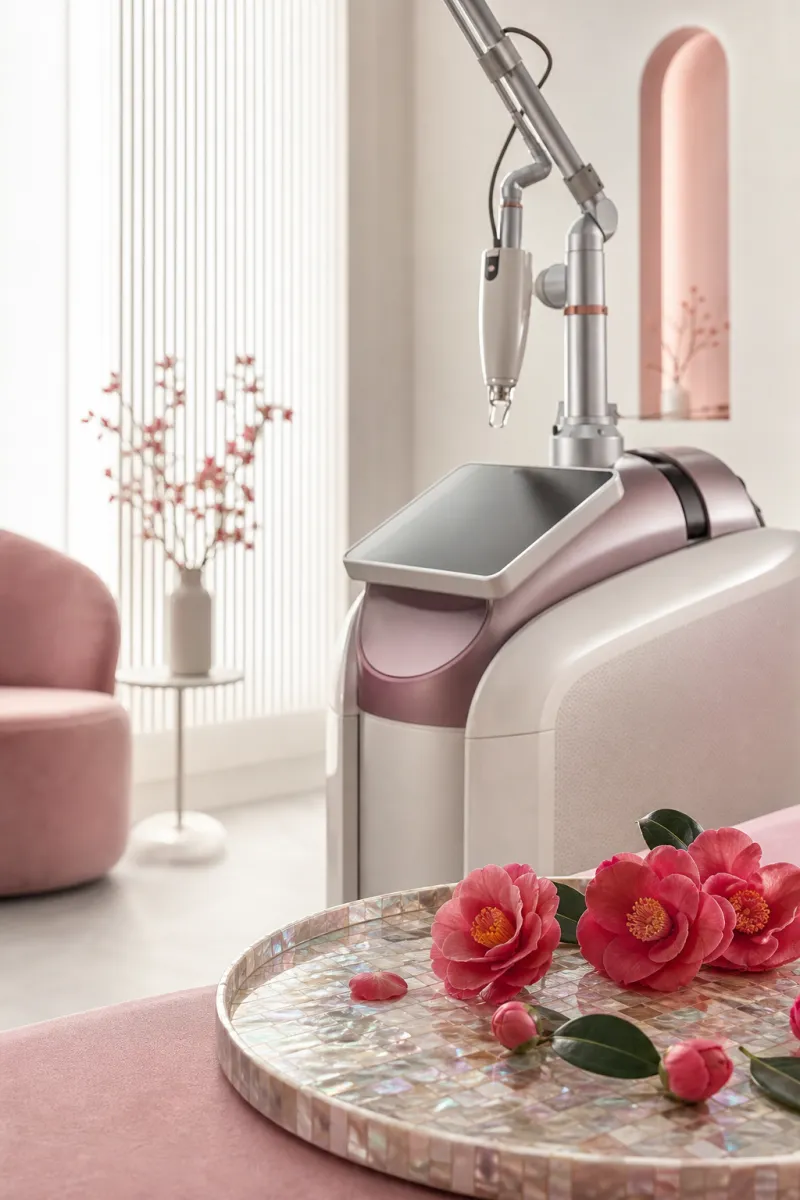
The pico laser Korea price a visitor pays is set mainly by the job: tattoo removal is quoted by the size and colors of the design, freckle and sun-spot work by zone or number of marks, and facial toning by session or course. Listed rates are before VAT, and 10% VAT is added at payment. Because ink fading and pigment courses run over months, long-stay visitors in Seoul can plan and finish a course, while short-trip visitors usually pay one-off rates. Aftercare products, healing creams and follow-up checks may sit outside the session line, so ask for a written breakdown.
Guide
How a tattoo removal quote is built
Clinics usually price ink work by area, in size bands or by measured dimensions, and then per session. Color matters because each shade may need a separate wavelength pass. Dense professional ink, cover-ups and tattoos on the hands or feet often need more rounds, which multiplies the total even when the per-visit rate looks modest.
Some clinics lower the rate as the tattoo fades and the area shrinks; others keep it fixed. Ask which applies, and get a written range of expected sessions.
| Tattoo feature | Effect on the quote | What to ask |
|---|---|---|
| Size of the design | Sets the size band or area charge | Is the band measured on the skin or on a photo? |
| Number of ink colors | Extra wavelengths can add a separate line | Which colors does the device cover? |
| Ink density and layers | More sessions over a longer period | What session range do you expect? |
| Body location | Hands, feet and fingers often clear slowly | Will the plan change after the first visits? |
Guide
How spot and toning work is charged
Freckles and sun spots are commonly billed per zone, such as both cheeks, or by the number of marks. Toning for diffuse pigment is usually billed per session, with prepaid courses lowering the cost of each visit. The pico laser seoul price for the same service still differs between clinics because of the device, the operator and what the session includes.
Toning protocols vary. Miyata's 2018 report in Nippon Laser Igakkaishi described melasma toning with a 1,064 nm picosecond laser alongside 532 nm and 785 nm settings, one reason menus list several wavelength options.
Guide
Fitting a course into a semester or working-holiday stay
Course length is where a long stay changes the budget. In a 2023 randomized trial in Frontiers in Medicine, Liang and colleagues gave 60 melasma patients with skin types III to IV three sessions at four-week intervals, comparing a 1,064 nm picosecond laser, a 755 nm picosecond laser and 2% hydroquinone cream; the 1,064 nm group showed the largest drop in severity scores, and four patients had recurrence.
A three-session plan at that spacing covers about two months, which fits a semester but not a holiday week. The recurrence finding is a reason to budget for possible maintenance visits. Tattoo courses, with longer gaps, often run well past one semester.
- Count the weeks you will really be in Seoul before buying a prepaid course.
- Ask how unused sessions are handled if your stay ends early.
Guide
Costs that sit outside the session line
The per-session figure is only part of the total. Ask whether each of these is included, charged once or charged every visit:
- Numbing cream and the time it needs before the pass.
- Soothing masks or cooling after treatment.
- Dressings and healing ointment for blistered tattoo areas.
- Daily sunscreen, needed through the whole course.
- A brightening or soothing home-care cream between toning sessions.
- A follow-up check if the skin reacts.
Guide
When a skin reaction pauses the plan
Real side effects can stretch the timeline and the spend. Post-inflammatory darkening, more common in skin that tans easily, may pause sessions for weeks or add a cream. Blisters after tattoo passes need dressings and time, and pale patches can follow repeated strong passes. A sunburn between visits raises these risks.
Recovery after gentle toning is short but not absent, with redness for hours to a few days. The Hongdae price table on this site lists current session rates.
Evidence
Research behind this page
- Laser-Toning Treatment for Melasma by Using 1,064 nm (532 nm, 785 nm) Picosecond LaserNippon Laser Igakkaishi · 2018 · doi:10.2530/jslsm.jslsm-39_0014
Reports a laser-toning approach for melasma using a 1,064 nm picosecond laser, with 532 nm and 785 nm settings also described.
- Comparison of the efficacy and safety of picosecond Nd:YAG laser (1,064 nm), picosecond alexandrite laser (755 nm) and 2% hydroquinone cream in the treatment of melasma: A randomized, controlled, assessor-blinded trialFrontiers in Medicine · 2023 · doi:10.3389/fmed.2023.1132823
In 60 melasma patients with skin types III to IV given three sessions at four-week intervals, the 1,064 nm picosecond laser reduced severity scores more than the 755 nm laser or 2% hydroquinone, with similar safety and a few recurrences.
FAQ
Questions about Laser toning in Hongdae
Is the pico laser price in Korea charged per session or per course?
Both models are common, and many clinics offer a single-session rate next to a prepaid course rate. Courses lower the cost of each visit but only make sense if you can attend every session at the planned interval. Tattoo work is often billed visit by visit because the session count is uncertain. Ask to see both options written before VAT, then add 10% VAT at payment.
Why can a small colored tattoo cost more than a larger black one?
A small multicolor tattoo can need more passes and more sessions than a larger black design. Black ink absorbs a wide range of wavelengths, while red, green, blue and yellow may each need a separate setting, and some shades fade slowly. Each extra pass or visit adds to the total. Ask the clinic to explain which colors it expects to fade easily and which may linger.
Should I get a written estimate before the first tattoo session?
Yes, a written estimate makes later visits much easier to compare and plan. It should state the size band, the per-session rate before VAT, the expected session range and the interval. It helps if it also says what happens to the rate as the tattoo shrinks. Keep a copy with dated photos, especially if you might finish the course elsewhere.
Are numbing cream and dressings charged separately?
Sometimes they are included and sometimes they appear as separate lines, so ask before treatment. Numbing cream is commonly part of the session, while dressings, healing ointment and take-home creams are more often extra. Over a long tattoo course these small items add up, so a clear list of what each visit includes avoids surprises at the counter when you pay.
Does the device or wavelength change what I pay?
It can, because clinics often price different picosecond platforms and wavelength options as separate menu items. A session that uses a lens attachment for texture, or several wavelengths for colored ink, may be listed at another rate than a plain toning pass. The right setting depends on the target, not on the rate. Ask why a given wavelength is chosen for your skin or tattoo.
Can I pay for one session first and decide on a course later?
Usually yes, and a single first visit is a sensible way to see how your skin reacts before committing. Some clinics allow the first session to count toward a course bought afterward, while others do not, so check this at the start. For tattoos, a first visit also shows how quickly the ink responds. Card payment is widely accepted, but confirm the method in advance.