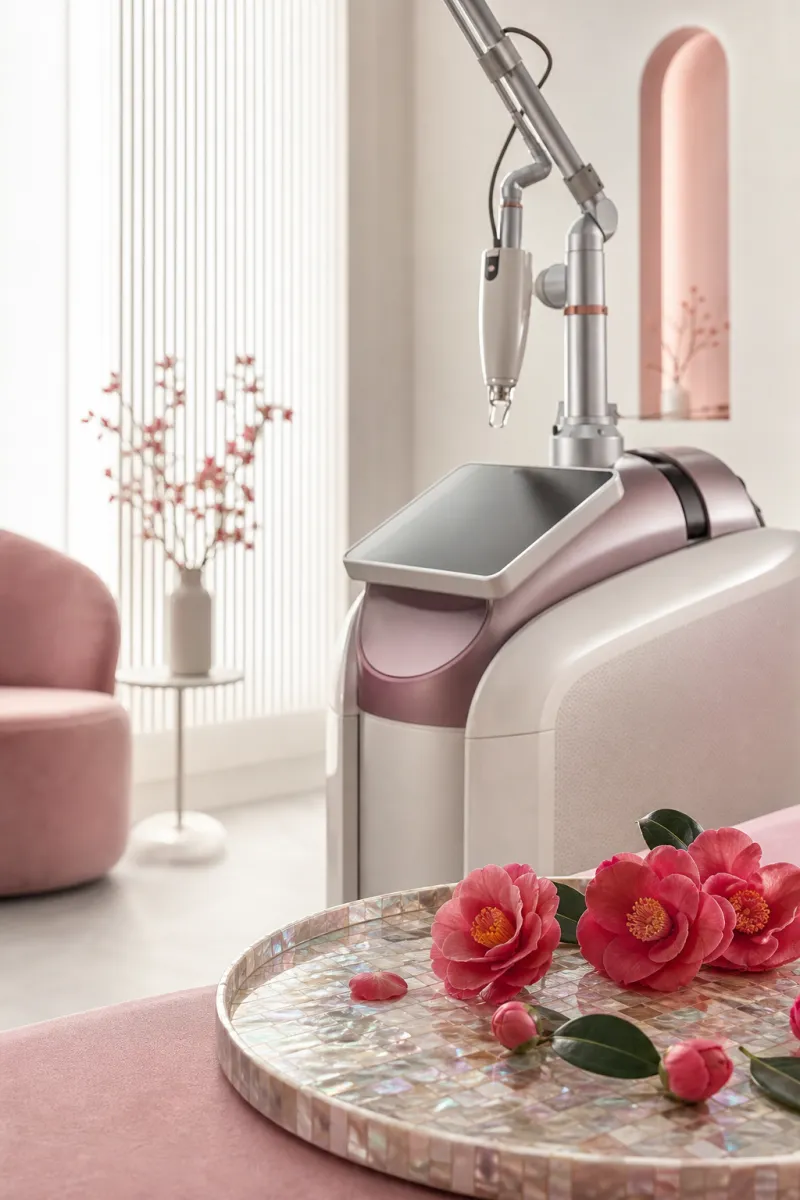
Acne laser treatment in Korea is a menu label that frequently covers radiofrequency devices rather than a true laser, and the main choice is between energy delivered through fine needles and energy applied from the skin surface. Microneedle radiofrequency, such as Potenza, places heat at an adjustable depth of roughly 0.5 to 3.5 mm, where oil glands and inflamed follicles sit. Surface fractional radiofrequency stays outside the skin. Research suggests the needle route works faster in the first session, while both reach similar results after a short series. Neither replaces acne medicine, and redness usually settles within hours to a few days, so flying home the same day is generally possible.
Guide
Is the acne device on the menu really a laser?
Clinic menus in Seoul use the word laser loosely. For breakouts that are still active, the device behind the label is often microneedle radiofrequency, which is electrical energy turned into heat, not a light beam. Lasers proper, such as gentle 1064 nm toning or vascular wavelengths, tend to be used for the red or brown marks that pimples leave behind.
Asking for the device name and energy type is the quickest way to know what you are buying. It also tells you what to expect afterward: needle devices leave pinpoint marks, while light-based toning mainly causes brief flushing.
Guide
Needles or no needles: how the two radiofrequency routes compare
Both methods heat the skin in a grid of tiny zones, leaving untreated skin between them to speed healing. The difference is where the heat lands. Needles carry it below the surface to a chosen depth, so the top layer is spared, while surface devices pass it down through the outer layer.
| Point | Microneedle RF | Surface fractional RF | Low-fluence laser toning |
|---|---|---|---|
| Energy | Radiofrequency through insulated or bare needles | Radiofrequency from electrode pins on the surface | 1064 nm Nd:YAG light |
| Depth control | Set per area by needle length | Fixed by tip and energy | Shallow, broad pass |
| Main target | Inflamed follicles and oil glands | Inflamed follicles, texture | Redness and marks after pimples |
| Feel | Pricking with numbing cream | Hot, snapping sensation | Warm flicks |
| Look afterward | Pinpoint marks, mild swelling | Grid of small dots | Brief pinkness |
Guide
What a split-face trial found about speed and comfort
A 2020 split-face study by Zeng and colleagues in the Journal of Cosmetic Dermatology treated 10 people with moderate to severe acne, using microneedle radiofrequency on one cheek and surface fractional radiofrequency on the other, three times at four-week intervals. After the first session the needle side showed larger gains in both inflamed and non-inflamed spots, and patients preferred it.
By the later sessions the two sides had caught up with each other, with no significant gap in results. One finding runs against intuition: pain scores were higher on the surface side. For a visitor, this suggests that the needle route suits a short stay where only one or two sessions fit, while either route can work across a longer course.
Guide
Results reported in Korean skin with active breakouts
A 2012 study by Lee and colleagues in Dermatologic Surgery followed 18 Korean patients with Fitzpatrick skin type IV and moderate to severe inflammatory acne, who had two microneedle radiofrequency sessions a month apart. Most showed moderate to marked improvement in the number and severity of inflamed lesions, and none had their breakouts worsen.
That second point matters because many people worry that heat or needles will spread infection. The study was small and had no comparison group, so it shows that the approach is workable in medium-toned skin rather than how well it compares with other treatments.
Guide
Matching the option to how your acne looks
Deep, painful lumps and very oily skin usually point toward needle radiofrequency once the inflamed spots have settled, sometimes followed by an LED soothing step. Mostly closed comedones and rough texture may suit a surface device or chemical peels. If the spots have calmed and what bothers you is lingering redness or brown marks, a laser aimed at those marks usually fits. Dents and pitted scars are a separate goal with their own planning.
- Ask which device is used and whether it is radiofrequency or laser
- Ask what depth or setting suits each area of your face
- Ask how many sessions fit the time you have in Seoul
- Ask how the plan works with any acne medicine you take
Evidence
Research behind this page
- Use of Fractionated Microneedle Radiofrequency for the Treatment of Inflammatory Acne Vulgaris in 18 Korean PatientsDermatologic Surgery · 2012 · doi:10.1111/j.1524-4725.2011.02267.x
In 18 Korean patients with skin type IV and inflammatory acne, two monthly microneedle radiofrequency sessions led to graded improvement in most cases, with no worsening of active lesions.
- A split‐face comparison of a fractional microneedle radiofrequency device and fractional radiofrequency therapy for moderate‐to‐severe acne vulgarisJournal of Cosmetic Dermatology · 2020 · doi:10.1111/jocd.13299
In a 10-patient split-face trial, microneedle radiofrequency improved acne faster after one session than surface fractional radiofrequency, results evened out after three sessions, and the surface side was more painful.
FAQ
Questions about Laser toning in Hongdae
Can I have acne laser treatment in Seoul while a few pimples are still inflamed?
Yes, needle radiofrequency is often used on skin with active inflamed spots, as long as there is no spreading infection or open wound. In the 2012 Lee study in Dermatologic Surgery, no patient's active acne worsened after treatment. The doctor may skip a very swollen cyst or treat it separately. Mention any recent flare, fever or new medication at the consultation so the plan can be adjusted.
Will the red marks from old pimples fade with the same device?
Sometimes, but red or brown marks usually respond to a different tool than active breakouts. Microneedle radiofrequency is aimed at inflamed follicles below the surface, while lingering redness is often treated with a vascular laser or gentle toning. Many plans treat the breakouts first and turn to marks once new spots slow down. Ask whether one session can address both, or whether they are better spaced apart.
How soon can I wear makeup after a needle radiofrequency session?
Most clinics advise waiting until the pinpoint marks have closed, often by the next day, before applying makeup. Fresh needle channels can let product and bacteria into the skin, which is a concern for acne-prone faces. A gentle cleanser, a plain moisturizer and sunscreen are usually allowed sooner. Follow the written aftercare you are given, since timing depends on needle depth and how your skin reacts.
Do I need to stop my acne medicine before a device session?
Possibly, so bring a full list of prescriptions and creams to the first visit. Oral isotretinoin and strong topical retinoids can make skin more fragile, and some doctors pause them or adjust energy settings around treatment. Antibiotics and other tablets may also matter. Do not stop any prescription on your own; the treating doctor and your prescriber should agree on timing together.
Does needle radiofrequency carry any risk of darker marks afterward?
Yes, darkening after inflammation is possible, especially in medium to dark skin, although it usually fades over weeks to months. Any heat-based device can trigger it, and irritation from picking or sun exposure in the following days adds to the risk. Strict sun protection after each session lowers the chance of marks, and a recent tan is a reason to wait. Ask how energy is set for your skin tone before the first pass.