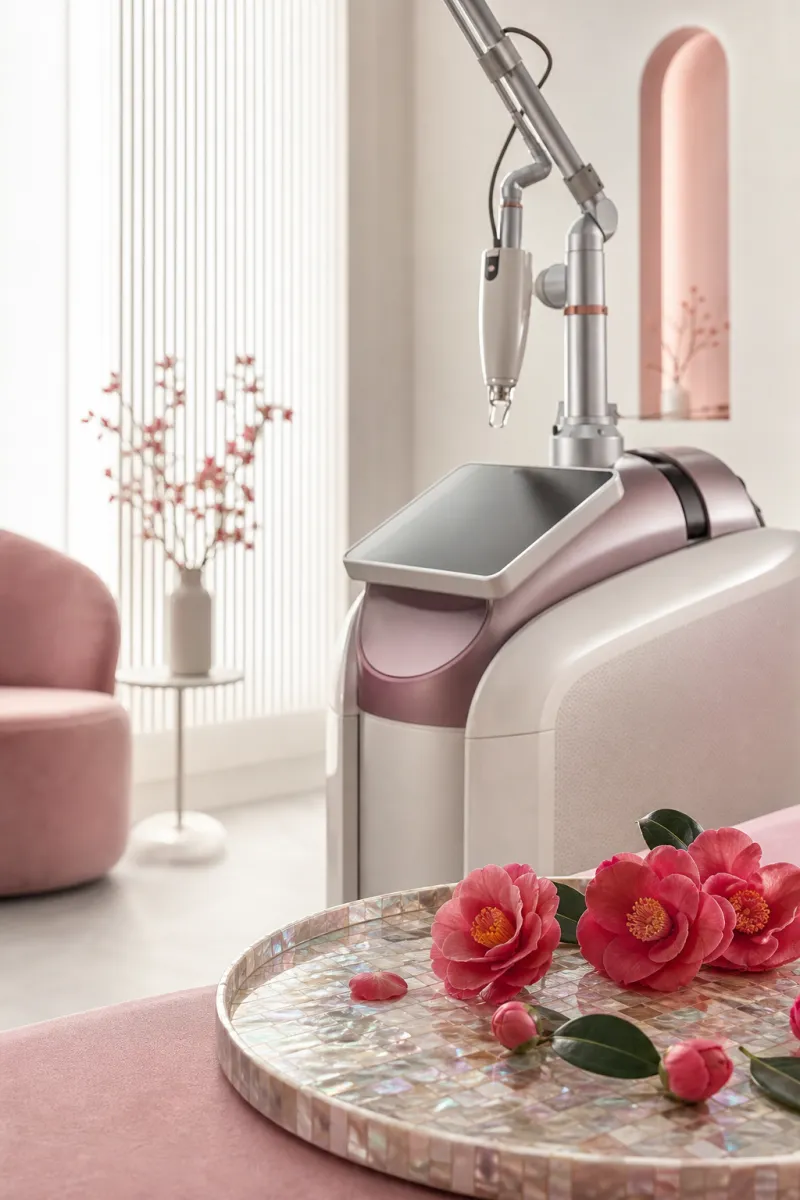
Melasma treatment in Korea often includes a laser, but the laser is the part of the plan most able to backfire, so it works as a support act rather than the main fix. Melasma is a chronic, hormone- and light-sensitive condition; it can be lightened and held down, yet it tends to return. Low-fluence 1064 nm Nd:YAG toning fades patches for a while, and research shows the gain shrinks over months unless creams and strict sun protection carry on. Too many sessions, or settings that heat reactive skin, can leave darker rebound patches or pale spots.
Guide
How much can toning do for melasma, and for how long?
The largest summary of the evidence is a 2022 meta-analysis by Cervantes and colleagues in Dermatologic Surgery, which pooled 50 studies covering 1,772 patients treated with low-fluence Nd:YAG toning. Used alone, toning lowered melasma severity scores in the first weeks and months, but by 24 weeks or more after treatment the average change had slipped back to roughly zero. When toning was combined with other therapy, the improvement at that later point was still clearly present.
Read plainly, a laser on its own buys a lighter phase rather than lasting control. The useful consultation question is what keeps the result after the last session: a lightening cream, a tablet the doctor may consider after checking your history, and sunscreen worn every day.
Guide
Melasma with red, visible vessels behaves differently
Some melasma sits on a background of fine red vessels, a pattern described as telangiectatic melasma. The thinking is that the vessels feed the pigment process, so a vascular laser wavelength is sometimes added. A 2020 split-face trial by Lueangarun and colleagues in the Journal of Cosmetic Dermatology tested a 585 nm Q-switched Nd:YAG laser plus 4% hydroquinone against the cream alone in 21 Thai women with skin types III to V.
The laser side improved faster at weeks 2, 4 and 8. Yet in that trial 19% of patients developed post-inflammatory darkening on the treated side, mostly in skin types IV and V, and rebound pigment also appeared. If your melasma looks pinkish or flushes easily, ask how the redness will be treated and how heat is limited on darker skin.
Guide
Skin tone and session count as risk factors
Two things raise the chance that melasma laser work goes wrong. The first is skin that darkens readily after any irritation, which includes many Asian, Middle Eastern, Latin American and South Asian skin tones. The second is repetition: in the Cervantes meta-analysis, white or pale spots (hypopigmentation or leukoderma) became more frequent as the number of sessions rose.
Pale spots matter because they can be slow to recover, while ordinary darkening usually fades with time. A plan that spaces sessions, reviews photos between visits and sets a ceiling on the total shows the clinic is weighing this risk.
- Skin that stays dark for weeks after a pimple or scratch
- A recent tan
- Melasma that began with pregnancy or hormone pills
- Earlier laser sessions that left blotchy or pale areas
Guide
Warning signs that should pause a course
Melasma can look slightly darker for a day or two after a session and then settle. Darkening past a week, new pale dots, or stinging beyond the evening of treatment are reasons to stop and review. A careful clinic lowers energy, lengthens the gap, or switches to cream-only care.
Living in or near Hongdae for study or work makes this easier, since you can return for a check before the next session. On a short trip, ask for written aftercare and photos of your starting skin.
Guide
What usually comes before, or instead of, a laser
Many doctors start with daily broad-spectrum sunscreen and a tinted product that also blocks visible light, adding gentle toning if progress stalls. Heat from saunas or hot yoga can also feed melasma, so lifestyle advice is part of the plan.
Evidence
Research behind this page
- Efficacy and Safety of Low Fluence Nd:YAG Laser Treatment in Melasma: A Meta-Analysis and Systematic ReviewDermatologic Surgery · 2022 · doi:10.1097/dss.0000000000003635
Pooling 50 studies of 1,772 patients, this review found that toning alone lost most of its effect by 24 weeks, combination therapy held up longer, and pale spots grew more common with more sessions.
- Postinflammatory and rebound hyperpigmentation as a complication after treatment efficacy of telangiectatic melasma with 585 nanometers Q‐switched Nd: YAG laser and 4% hydroquinone cream in skin phototypes III‐VJournal of Cosmetic Dermatology · 2020 · doi:10.1111/jocd.13756
In 21 women with telangiectatic melasma, adding a 585 nm laser to hydroquinone sped up improvement, but 19% developed post-inflammatory darkening, mainly in skin types IV and V, along with rebound pigment.
FAQ
Questions about Laser toning in Hongdae
How long does improvement from melasma toning usually hold?
Improvement from toning alone often fades within about six months, so lasting control depends on what continues after the sessions end. The 2022 Cervantes meta-analysis in Dermatologic Surgery found the average gain from toning alone was close to zero by 24 weeks, while combined approaches kept a clearer benefit. Plan for daily sun protection and a maintenance cream from the start, and treat the laser as one phase of a longer routine.
Is it normal for melasma to look lighter for a few weeks and then come back?
Yes, a lighter phase followed by gradual return is common, because the triggers behind melasma stay active after treatment. Hormones, sunlight, visible light and heat keep stimulating pigment cells. A return often means maintenance stopped or sun exposure rose, not that the laser failed. Note when the patches came back and what changed, since that helps a doctor adjust the next step.
Why does a doctor ask about birth control pills or hormone therapy first?
Hormones are one of the main drivers of melasma, so the doctor needs to know whether a trigger is still active before planning anything. Patches that started with pregnancy, contraceptive pills or hormone therapy often respond less steadily while that influence continues. The answer can change how strongly a laser is used, or whether creams come first. Bring a list of current medicines, including supplements, to the consultation.
Should I ask for a test area before full-face toning?
A small test area is a reasonable request if your skin darkens easily or a previous laser left marks. The doctor treats a discreet patch, then checks it after one to two weeks for darkening or pale spots before committing to the whole face. This adds time, which suits a longer stay in Seoul more than a weekend visit. If time is short, ask for lower starting settings instead.
Can I start melasma treatment in Korea and continue it at home?
Yes, and for melasma this is often sensible, since much of the long-term work is sun care and gentle home routines rather than clinic visits. Ask for the laser type and settings used, the names of any aftercare products, and photos of your starting skin. A doctor at home can then continue maintenance or decide whether more sessions are worth it. Keep the record in one file you can show at any follow-up visit.
Can I fly home the same day as a melasma laser session?
Flying home the same day is generally possible after low-fluence toning, because the usual effect is mild redness that settles within hours to a few days. The bigger concern on a trip is sunlight: airport walks, window seats and sightseeing all add exposure. Wear a broad-spectrum sunscreen and a hat, and avoid heat-heavy plans such as saunas for the first days after the session.